What buyers really mean when they search for an exterior wall paint manufacturer
When sourcing an exterior wall paint manufacturer, most buyers are not just shopping for a color card and a bucket. They are trying to solve a larger problem: how to buy a coating that can survive sunlight, rain, dust, cleaning, and the realities of construction schedules without creating warranty headaches or complaints from end users. That is especially true for façades, where appearance and protection are tied together. A paint that looks good on day one but soils quickly or applies poorly on site becomes a cost, not a product.
This is why the search often overlaps with terms like exterior paint supplier and exterior coating manufacturer. In practice, the buyer may need a formulatory partner, a filling and packaging partner, or a private-label source for a line of architectural coatings. The right decision depends on the project: residential repainting, light commercial façades, distributor stock, or OEM branding for a regional market.
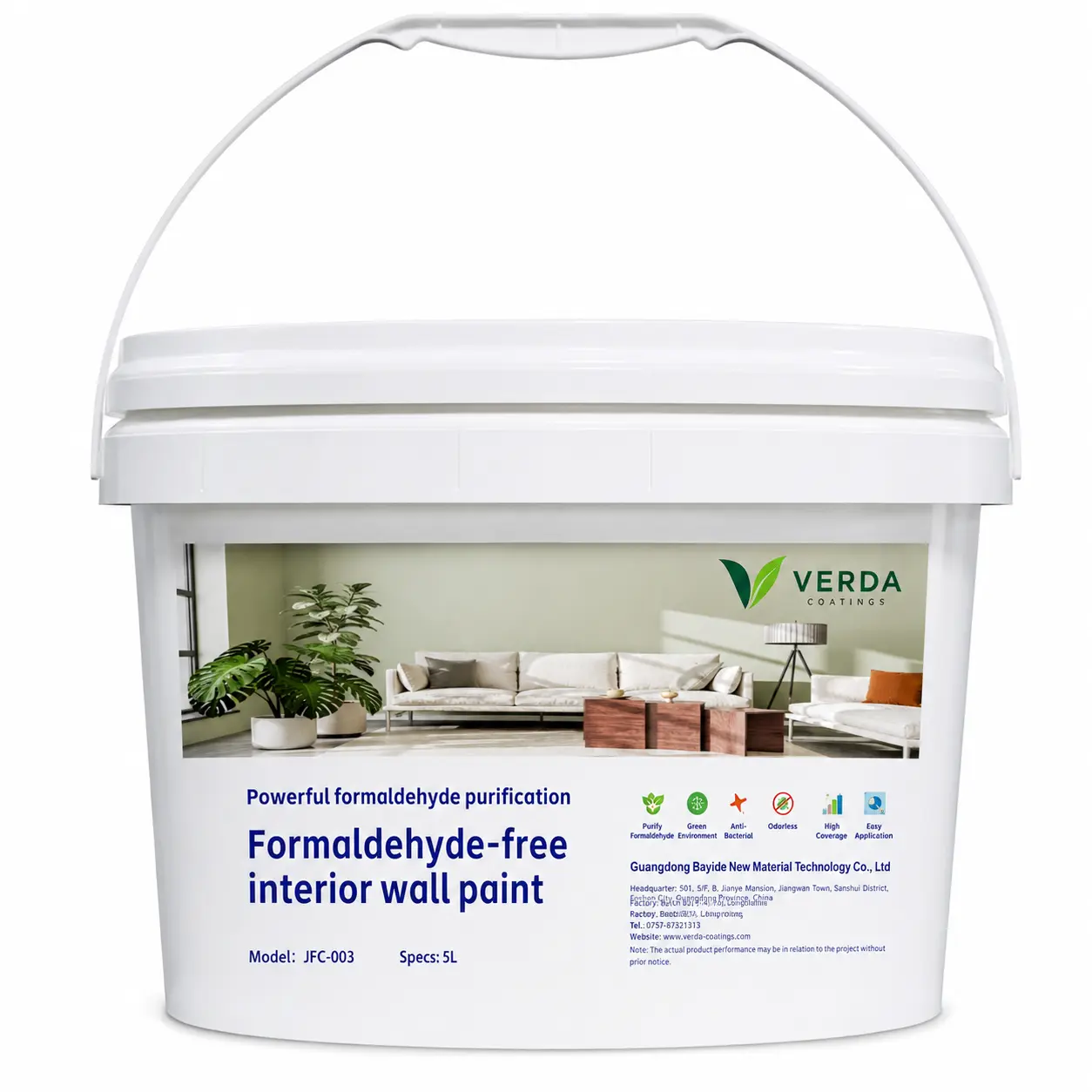
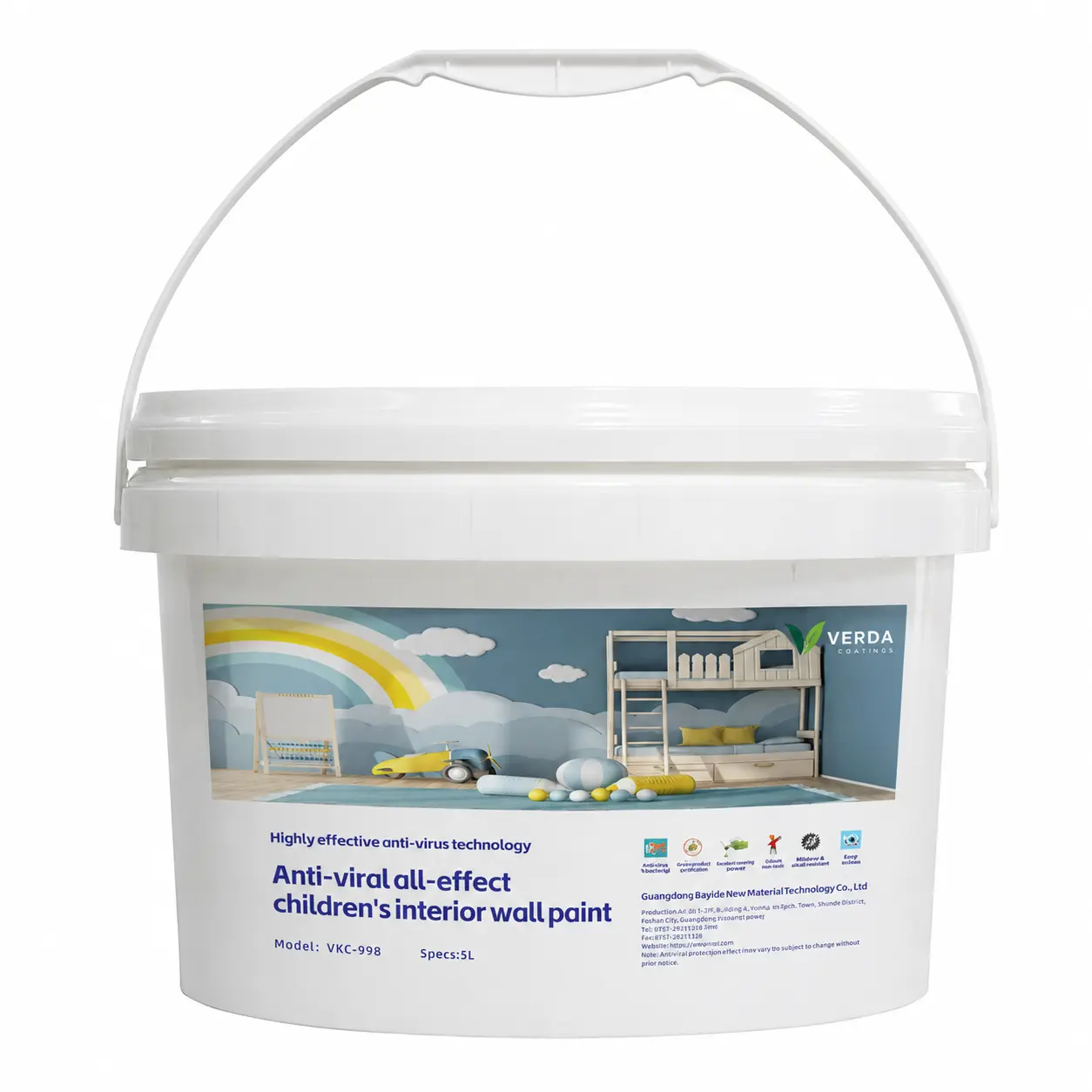
One supplied product example here is an anti-fouling exterior paint in a 5L pack, model AW-101, shown as “Eggshell Light” and presented in branded OEM-style packaging under VERDA Coatings and Guangdong Bayide New Material Technology Co., Ltd. That kind of product presentation tells you something useful before you even get to the technical sheet: the manufacturer is likely serving both product supply and branded packaging needs, which matters for distributors and project specifiers alike.
Quick buyer takeaway: what to check before you place an order
If you are comparing factories, the short version is this: don’t start with the bucket, start with the proof. A serious supplier should be able to talk clearly about formulation consistency, batch control, pack size options, labeling, and application guidance. For exterior systems, you also want clarity on substrate compatibility, sheen, and what the supplier actually means by performance claims such as “anti-fouling.” That phrase can refer to dirt resistance, contamination resistance, or another surface-cleanliness benefit. It should never be left vague in a purchase order.
For the supplied AW-101 example, the obvious commercial signals are the 5L size, the eggshell light finish, and the outdoor positioning. Those are practical details. A smaller pack often suits contractors, sample programs, or retail channels, while a soft-sheen finish can help hide minor surface irregularities better than a flat or high-gloss coating. Still, finish preference depends on architecture, climate, and the owner’s maintenance expectations.
What exterior wall coating buyers need from a manufacturer
Exterior wall coatings are judged in use, not in the lab brochure. End customers notice fading, chalking, dirt pickup, roller marks, and patchy touch-ups. Procurement teams notice return claims, short shelf life, and unreliable refill supply. Contractors notice whether the paint opens cleanly, spreads evenly, and behaves predictably on different façades.
That is why a reliable manufacturer should be able to support three layers of decision-making at once:
First, the product layer: what the coating is intended to do, what surface it suits, and how it looks after application. Second, the manufacturing layer: whether the supplier can formulate, mix, fill, and package with repeatability. Third, the commercial layer: whether the factory can support branded or private-label supply, which is often just as important as chemistry for distributors.
The packaged product supplied here suggests all three. It is described as a decorative and protective exterior wall coating, which is the right functional positioning for building exteriors and other outdoor surfaces. The pail format also points to a practical distribution model. Contractors and dealers know how to handle bucketed coatings, and a fitted lid with a carry handle is simple but useful in the field.
Product format matters more than many buyers admit
Many sourcing decisions fail because the buyer focuses on formula claims and overlooks format. A 5L bucket is not just a package size; it shapes the whole channel strategy. Smaller packs are easier to sample, easier to transport, and easier to test in market without tying up cash in inventory. They also suit residential touch-up and smaller façade jobs where a full drum would be overkill.
The visible pail structure on the supplied product is familiar for architectural coatings: white plastic pail, fitted lid, integrated handle, and a front label carrying the brand mark. That is standard enough, but it still matters. Packaging should protect the coating, present it clearly, and reduce leakage risk in handling. A weak pail or poorly fitted lid can erase the value of a good formula very quickly.
From a buyer’s point of view, the packaging also signals whether the supplier is comfortable with OEM work. If a manufacturer can present a labeled product cleanly and consistently, it usually means they understand distributor-facing requirements: artwork, batch identification, product naming discipline, and shelf presentation. Those are not glamorous details, but they drive sell-through.
Finish, appearance, and why “Eggshell Light” is a useful clue
Sheen is often underestimated in exterior projects. A flat finish can hide imperfections, but may be more difficult to maintain visually on busy façades. A higher gloss may read as more durable to some buyers, though it can also emphasize substrate flaws and create a different aesthetic than the architect intended. An eggshell finish sits in the middle, offering a softer sheen and a more forgiving look on walls that are not perfectly smooth.
The “Eggshell Light” label on the supplied paint suggests a controlled, low-sheen presentation. For many exterior walls, that is a practical choice. It can work for residential exteriors, light commercial buildings, and supply programs where buyers want a neat finish without a shiny surface. Still, the exact visual result depends on substrate preparation and application method, so a product name alone should not be treated as a guarantee of appearance.
If you are comparing suppliers, ask for consistent finish control across batches. Small variations in sheen can be surprisingly visible on large façades, especially where sunlight hits the wall at different angles. That is one of those field issues that rarely shows up in sales brochures but causes real arguments on site.
Anti-fouling: useful wording, but ask what it means
The supplied product is labeled “Anti-fouling exterior paint.” That is commercially attractive language, but buyers should translate it into a more precise question: what kind of fouling is being resisted, and under what conditions? In coatings, this could mean resistance to dirt pickup, staining, surface contamination, or biological growth. The image alone does not confirm which one is intended, and a responsible buyer should not assume.
This matters because two paints can both be described as anti-fouling while performing very differently. One may be designed mainly to stay cleaner in urban dust. Another may target moisture-related contamination. Another may simply be marketed with a broad cleanliness claim. If a manufacturer cannot explain the claim in plain language, that is a warning sign.
For façade projects, this is not a minor point. The coating is part of the building’s visible envelope. Once installed, maintenance costs and customer impressions are hard to reverse. Ask for the supplier’s technical explanation, the recommended application conditions, and any supporting test method if available. Do not let a tidy label do the work of technical due diligence.
How to compare an exterior paint supplier on more than price
Price still matters, of course, but it should not be the first filter. A better comparison looks like this:
Does the manufacturer offer stable packaging and labeling? Can they support your brand or channel model? Do they understand façade use cases? Can they keep product naming consistent across cartons, pails, and documents? Are they responsive when you ask about finish, application, or storage?
Those questions separate a true exterior coating manufacturer from a general trader. For buyers sourcing for projects or distribution, the difference often shows up later in documentation quality and order consistency. An exterior wall coating may be technically uncomplicated on paper, but the business around it is not. A delayed label revision, a vague batch description, or a mismatched pack size can slow a whole shipment.
There is also the issue of channel fit. A distributor may want shelf-ready 5L packaging and visible branding. A contractor supply program may care more about replenishment speed and predictable application. A project buyer may care about shade consistency and warranty language. The same factory can serve all three, but not every factory does so well.
Common mistakes buyers make when sourcing exterior wall paint
One common mistake is assuming the words “exterior” and “protective” automatically cover all outdoor conditions. They do not. Sun exposure, rain intensity, pollution, cleaning habits, and substrate type all affect performance. Another mistake is treating finish as an afterthought. On walls, sheen is part of the product specification, not decoration.
Buyers also sometimes over-trust a branding story and under-check the basics. A neat label, such as the supplied VERDA Coatings presentation, may indicate an organized supplier, but it does not replace technical questions. You still need to know how the paint is intended to be used and what sort of surfaces it is meant for.
Finally, some buyers forget the value of packaging discipline. Exterior coating supply can become messy fast if the pail size, cap design, and label information are not stable. That is a problem in warehousing, in retail display, and on job sites where products are moved around often.
Practical buying advice for project teams and distributors
If you are building a purchasing brief, keep it grounded. Start with the application: exterior walls, residential façades, or light commercial buildings. Then define the finish: in this case, something like eggshell light. Next, confirm the pack size and sales channel. A 5L pail is useful for dealers, sampling, and smaller jobs, but it may not be the best fit for every project.
Ask the manufacturer how the product is positioned: decorative, protective, or both. Ask what “anti-fouling” means in their own documentation. Ask whether they can support OEM branding if you need a private-label line. These are practical questions, not procurement theater.
And one small caution: do not let the bucket art make the technical decision for you. Good packaging helps sell a coating, but it does not prove performance. The most useful suppliers are the ones who can talk about both the finish and the factory process without bluffing.
FAQ: a few questions buyers usually ask
Is a 5L exterior wall paint mainly for contractors or retail?
It can serve both. A 5L pack is flexible enough for sample programs, smaller residential jobs, contractor touch-up work, and dealer shelves.
Does eggshell finish work outdoors?
Often, yes, depending on the formulation and substrate. The key issue is not just the sheen name but how the coating is designed for outdoor exposure and how it is applied.
Should I trust the term anti-fouling?
Only after you ask what it means in technical terms. It is a useful commercial phrase, but it needs definition before you spec it into a project.
What does OEM packaging add?
It helps distributors and brand owners launch product under their own label or a managed brand line. For many buyers, that is as important as the paint itself.
What to ask the supplier next
If you are evaluating an exterior wall paint manufacturer now, request the technical data sheet, confirm the intended substrate, clarify the meaning of the anti-fouling claim, and ask about packaging and branding options. If the supplier can answer those questions clearly and consistently, you are probably dealing with a factory that understands real market requirements, not just a single sale.
The supplied AW-101 example shows the kind of product that can work well in the market: a 5L architectural coating, soft-sheen presentation, and packaging suited to OEM or distributor channels. The next step is to verify whether the technical side matches the commercial presentation. That is where a useful sourcing conversation begins.