What buyers really mean when they search for an interior wall paint manufacturer
When people look for an interior wall paint manufacturer, they are usually not hunting for a brand story. They are trying to solve a supply problem: where to get a coating that is consistent, scalable, and suitable for actual jobsite conditions. Sometimes that means a primer for a residential repaint. Sometimes it means a project-ready product for a contractor network. And sometimes it means finding a factory partner who can support private label, bulk purchasing, and repeat orders without drama.
That is where the decision gets more practical than promotional. The right partner is not just the one with a glossy catalog. It is the one that can provide stable batches, clear labeling, packaging options, and enough technical clarity that your team can specify the product without guessing. If you are comparing an interior wall paint supplier against a manufacturer, the difference matters: one may sell stock, while the other may actually control formulation, filling, and packaging. For sourcing managers, that distinction affects lead-time risk, customization, and how much leverage you have when your customer asks for something slightly different.
The product category behind the search: primer, topcoat, or both
In practice, many buyers searching for wall paint solutions are looking for more than decorative finish coats. Primer products sit in the background but often determine whether the final paint system performs as expected. A primer can help prepare the wall surface before topcoat application, and in some projects it is the unglamorous layer that protects the schedule when the substrate is uneven or porous. The specific product provided here is labeled as a closed interior wall primer with “strong closure,” which suggests sealing or penetration-control intent, though the exact performance should still be verified by the buyer before specification.
That caution is worth stating plainly. Packaging, label language, and even a model number tell you something useful, but not everything. For example, the visible product information identifies VERDA Coatings, model NAB-130, in a 5L package. That gives procurement teams a starting point. It does not, however, confirm resin chemistry, VOC level, coverage rate, or substrate compatibility. Those items still need proper technical review from the manufacturer or supplier before the product is released to a project.
Why the manufacturer relationship matters in architectural coatings
Architectural coatings are sensitive to small changes in production. A coating that looks similar on paper can behave differently if the resin system, filler balance, or filling process shifts. That is why an experienced bulk interior paint supplier is often judged on repeatability as much as on price. Contractors notice if one pail opens and flows differently from the next. Distributors notice if a product label changes without warning. Project teams notice when the spec sheet is vague and the field crew has to improvise.
A credible manufacturer should be able to support a few basic buyer needs:
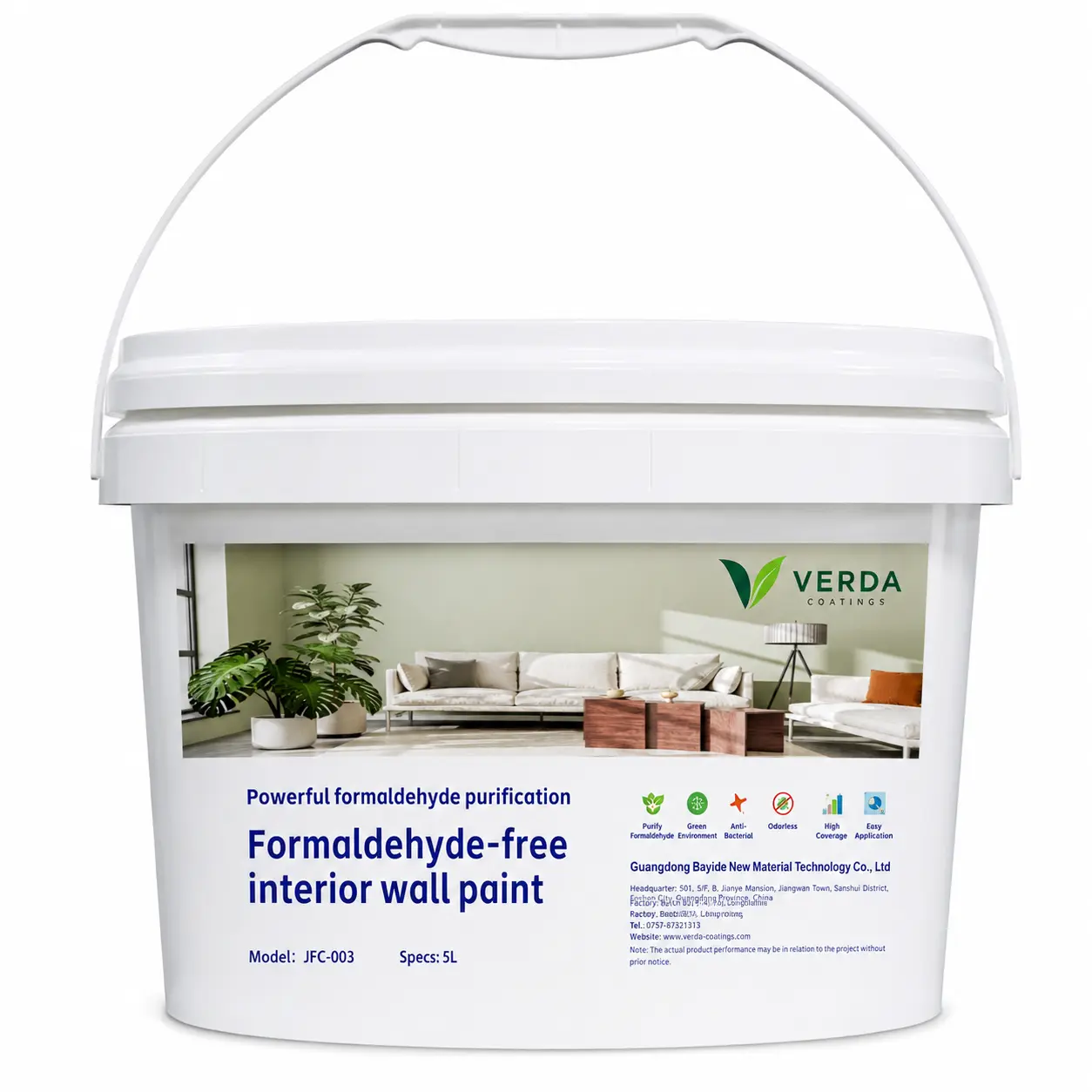
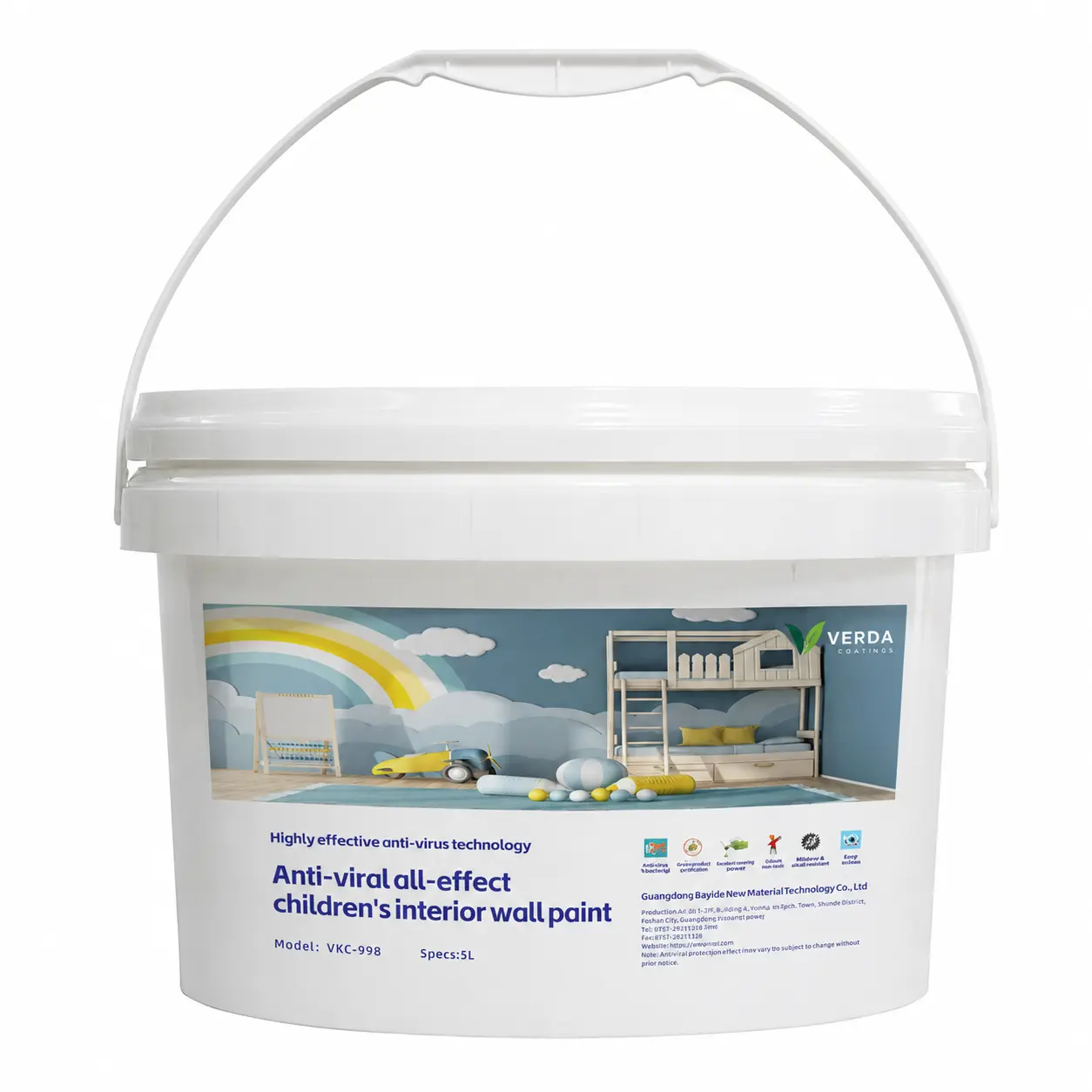
stable product identity, so the same model can be reordered without confusion; packaging that is practical to store and carry; and enough technical documentation to help with internal approval. For the NAB-130 product, the 5L plastic pail with handle and lid is a straightforward packaging format. It is a small detail, but in jobsite logistics these details count. A tight-fitting lid reduces the risk of spills and contamination, and the handle matters when the pail is moved across floors, stairwells, or storage areas.
What can be learned from the visible product details
Some buyers dismiss packaging as cosmetic. That is a mistake. Packaging is often the first clue about how a manufacturer thinks about distribution. A cylindrical plastic bucket with a handle suggests a product designed for practical handling rather than showroom display. The printed front label indicates a standard commercial presentation, which is typical for products intended for contractors, distributors, OEM/private-label channels, and project supply. Those channels need readable, repeatable labeling more than they need elaborate branding.
The model number NAB-130 is also useful. Model identifiers may seem dull, but they help purchasing teams track revisions and prevent mix-ups between similar products. If you are comparing several interior primers, a clean model structure is one of the simplest ways to keep documentation organized. It is especially useful when a company buys across multiple sites or when a distribution team handles both stock and project-based orders.
How to evaluate an interior wall paint manufacturer before you place an order
1. Ask what the product is meant to do
For a primer, the first question is not color or sheen. It is function. Is it intended to seal, promote adhesion, equalize absorption, or provide a base for a finish coat? The label language for NAB-130 points toward closure and interior wall priming, but buyers still need the technical explanation behind that phrase. If the supplier cannot explain the practical job of the product in plain language, that is a warning sign.
2. Verify the technical data, not just the sales description
Good buying practice in coatings means checking the product data sheet, application guidance, and safety information. This is where details such as recommended substrates, thinning guidance, drying behavior, and application method should appear. None of those are safe to assume from a photograph. A strong manufacturer will usually have this material ready. A weaker one may only offer a brochure and a price.
3. Look at packaging and supply fit
Not every buyer needs the same container size. The 5L format shown here may suit retail distribution, small contractor jobs, sampling, or localized project use. For larger contract work, the same manufacturer may need to support different pack sizes or private-label arrangements. If your business is scaling, ask whether the production line and filling setup can handle variations in pack size without creating delays.
4. Decide whether you need stock supply or customization
An interior wall paint supplier can be useful when you need a standard item quickly. A manufacturer becomes more valuable when you need control over labeling, packaging, or product positioning. If your team sells into multiple markets, private label can matter as much as chemistry. Buyers often discover this only after the first order. It is better to raise the question early.
Common mistakes buyers make with interior wall coatings
One common mistake is treating all interior primers as interchangeable. They are not. Some are better suited to sealing problem surfaces, while others are designed more as general-purpose base coats. Another mistake is approving a product on packaging alone. A tidy pail and a professional label are reassuring, but they are not a substitute for technical confirmation.
Another practical issue is over-specifying before the supplier has even clarified the formula. That can lead to confusion, especially when the exact chemistry is not yet confirmed. For the VERDA Coatings NAB-130 product, it is better to speak in verified terms: interior wall primer, closed primer, 5L packaging, model number visible. Anything beyond that should be confirmed directly with the manufacturer.
Quick buyer checklist for sourcing teams
If you are screening an interior wall paint manufacturer, start with the basics:
Can the supplier identify the product clearly by model and intended use? Do they provide technical documents that explain application and limitations? Is the pack size suitable for your channel or project? Can they support repeat orders without changing the product identity unexpectedly? And if you need private-label or contract supply, can they handle that cleanly?
These are not exotic questions, but they save a great deal of time. Coatings sourcing tends to go badly when teams assume the product will behave exactly as hoped because the label sounds right. A disciplined review catches problems before the first site delivery.
What this specific product suggests for distributors and project buyers
The VERDA Coatings NAB-130 5L closed interior wall primer appears positioned as a straightforward supply item for interior wall preparation. That makes it relevant to distributors, contractors, OEM/private-label buyers, and project procurement teams that need a practical primer in a manageable package. The product presentation is simple, which can be an advantage in trade channels where clarity matters more than marketing flourish.
Still, buyers should keep the same professional distance they would use with any coating product. Confirm the technical data. Check whether the primer is suitable for your intended substrate and finish system. Review storage and handling expectations. If your project depends on consistent wall preparation, do not rely on label language alone.
FAQ
Is an interior wall primer the same as interior wall paint?
No. Primer and finish paint serve different roles, even though both fall under architectural coatings. Primer is usually used to prepare the surface before the topcoat.
Can I judge a coating by its package size alone?
No. The 5L size is helpful for planning, but it does not tell you how the product performs.
What should I ask the supplier before buying?
Ask for the technical data sheet, application guidance, packaging options, and confirmation of the product’s intended use. If you need a private-label or bulk arrangement, ask about that early.
Why does the label saying “closed interior wall primer” matter?
It suggests a sealing or closure function, which may be important for porous or uneven surfaces. Even so, the exact performance should be verified before specification.
Next step for buyers
If you are comparing suppliers, start with the verified details you already have: VERDA Coatings, model NAB-130, 5L packaging, and the product’s stated role as a closed interior wall primer. Then request the technical information that fills in the gaps. That is the practical way to judge whether a manufacturer can support your channel or project without surprises.
For sourcing teams, the goal is not just finding a can of paint. It is finding a repeatable coating supply relationship that fits the job, the paperwork, and the realities of the market.