What buyers really mean when they search for an interior wall paint manufacturer
When engineers, sourcing managers, or project buyers look for an interior wall paint manufacturer, they are usually not just shopping for a bucket of paint. They are trying to solve a broader problem: how to secure a coating that looks consistent, applies without headaches, stands up to everyday cleaning, and arrives in packaging that fits the channel they sell into. For distributors and OEM teams, the decision is often even more practical. Can the supplier support branded packaging? Is the product line stable enough for repeated orders? Does the formula fit residential, commercial, or project work? And, just as important, does the manufacturer understand the difference between a decorative coating and a product that has to perform in real interior spaces?
That is where the conversation around self-cleaning interior paint becomes useful. The phrase itself can mean different things depending on the supplier, and buyers should be careful not to assume every “easy-clean” or “self-cleaning” label describes the same chemistry or the same performance. Still, the demand behind it is easy to understand. Interior walls get touched, scuffed, marked by carts, cleaned too often, or cleaned too aggressively. In many projects, the paint is not a design afterthought; it is part of the maintenance strategy.
Why self-cleaning interior paint has become a practical buying category
A good interior wall coating has to do more than look smooth on day one. In schools, offices, apartment corridors, hospitality spaces, and busy homes, wall finishes get judged by how they age. That is why stain resistance and ease of maintenance matter so much. Buyers do not always need a dramatic claim. Sometimes they just need a product that helps custodial teams remove common marks without damaging the finish or creating a patchy repair cycle.
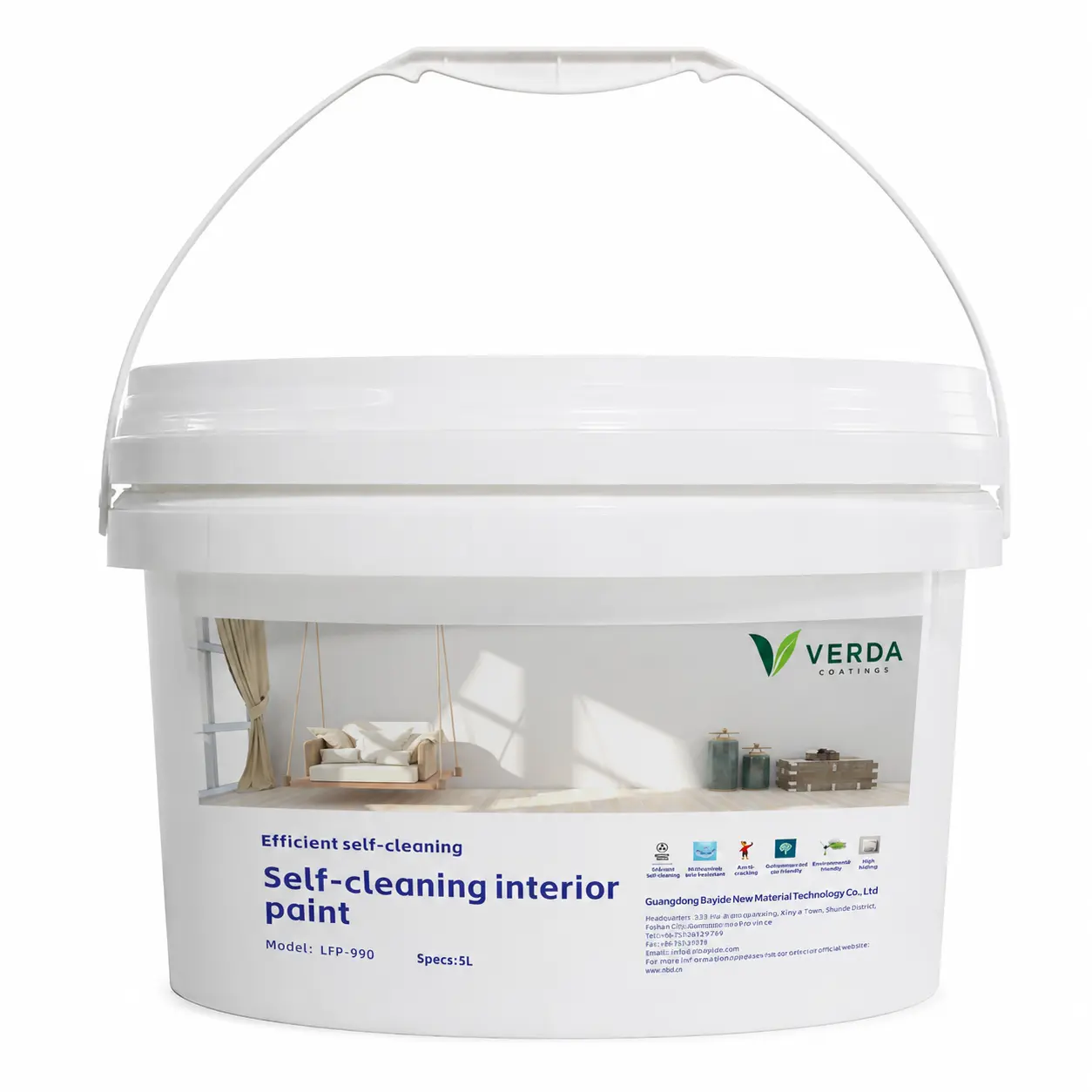
The product referenced here, VERDA Coatings’ self-cleaning interior paint, is presented in a 5L package under model LFP-990. Those details matter because many sourcing decisions begin with packaging and format, not chemistry. A 5L pail is a familiar size for smaller project work, sampling, retail distribution, and some contractor jobs. It is also the sort of unit that works well for branded shelves, private label programs, and test runs before a larger rollout.
It is worth noting, though, that “self-cleaning” is a term buyers should treat carefully unless the supplier provides clear technical data. In coatings, marketing language can be broader than the actual tested behavior. Some products are formulated for improved soil release or better washability. Others use the phrase more loosely. If the application is mission-critical, the label is not enough.
Quick reference: what to compare before choosing a supplier
When evaluating an interior wall paint supplier, the key comparison points are not always glamorous, but they are the ones that save time later.
1. Product purpose
Is the paint meant for residential interiors, commercial interiors, or project-based supply? A supplier that understands the target use will usually package and position the product more effectively.
2. Packaging format
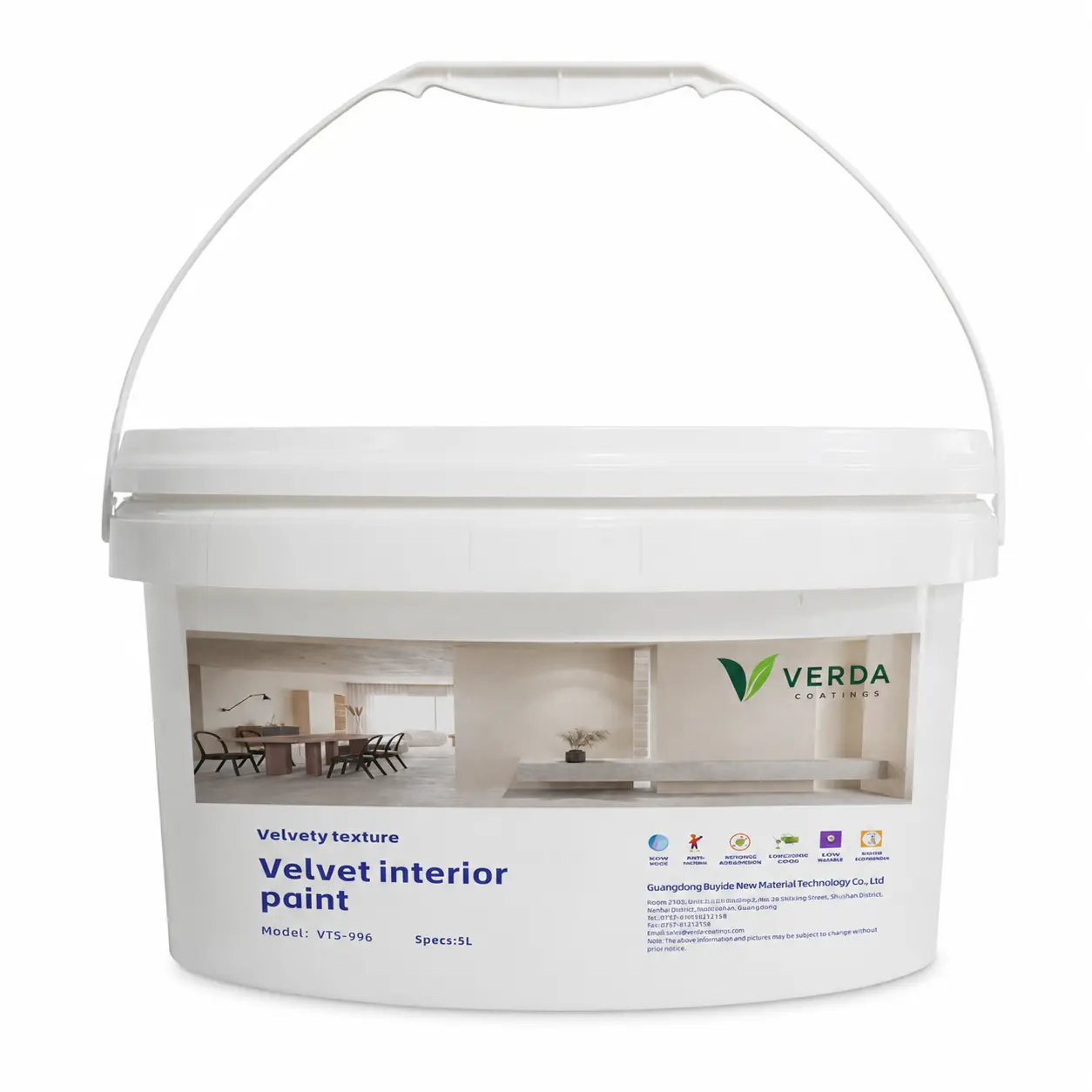
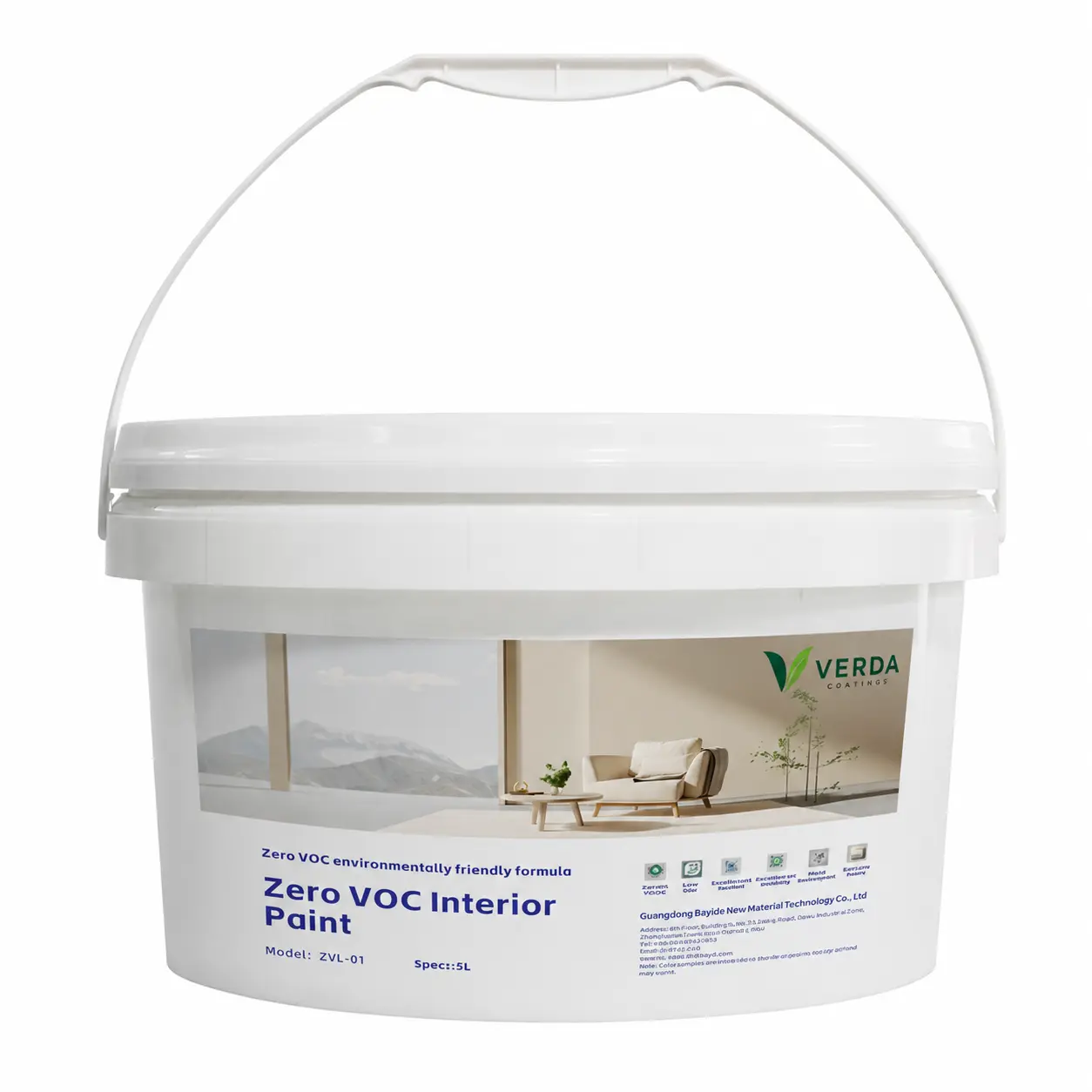
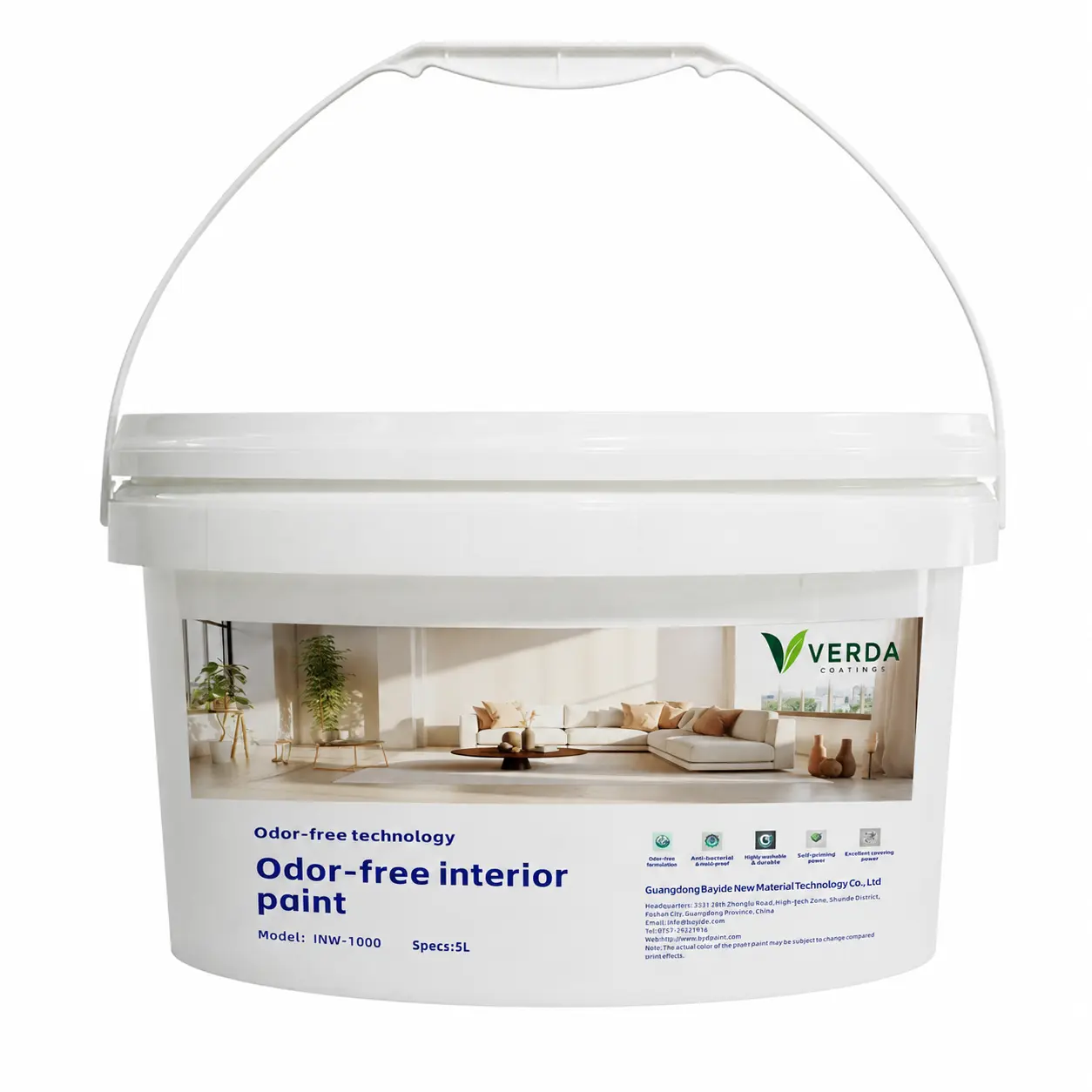
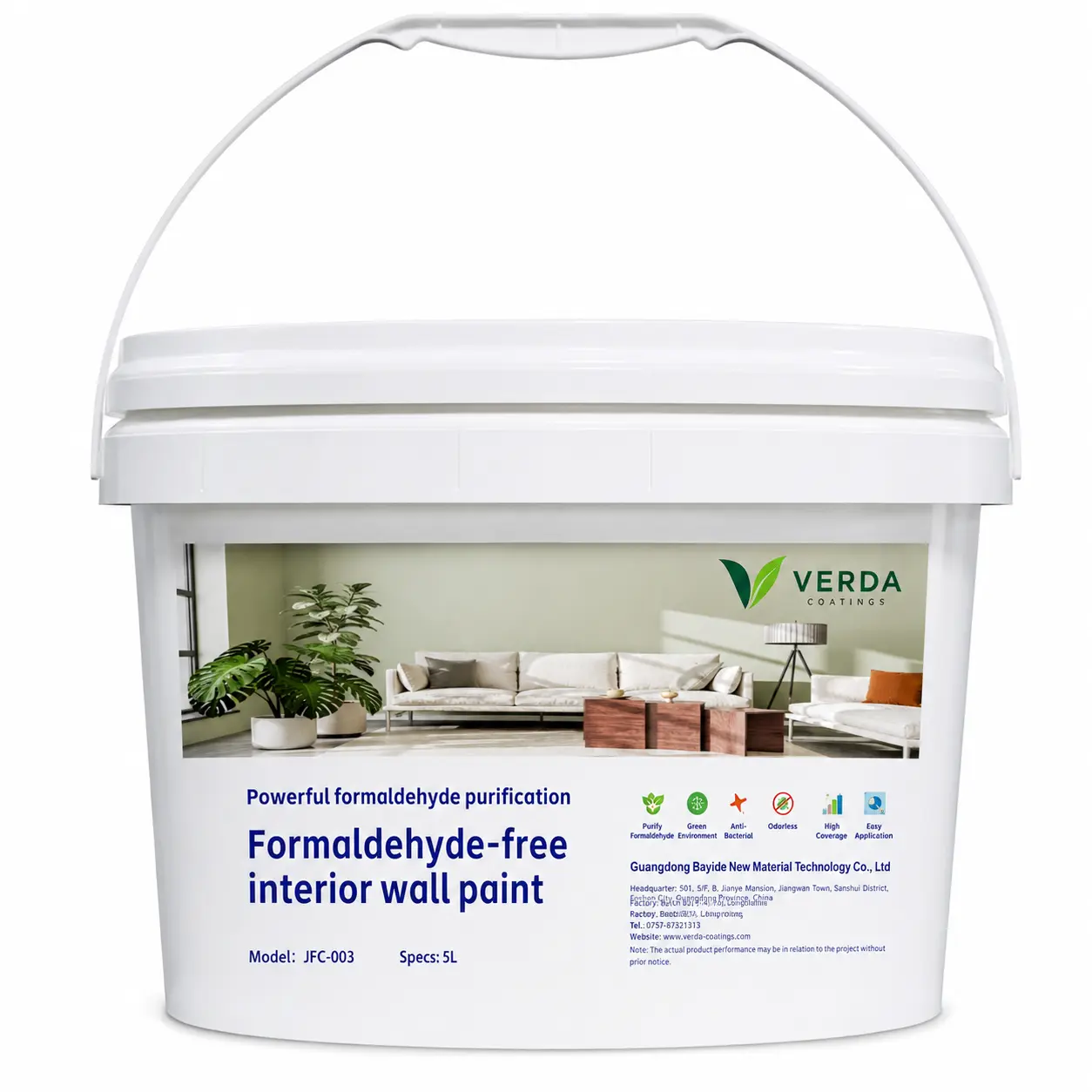
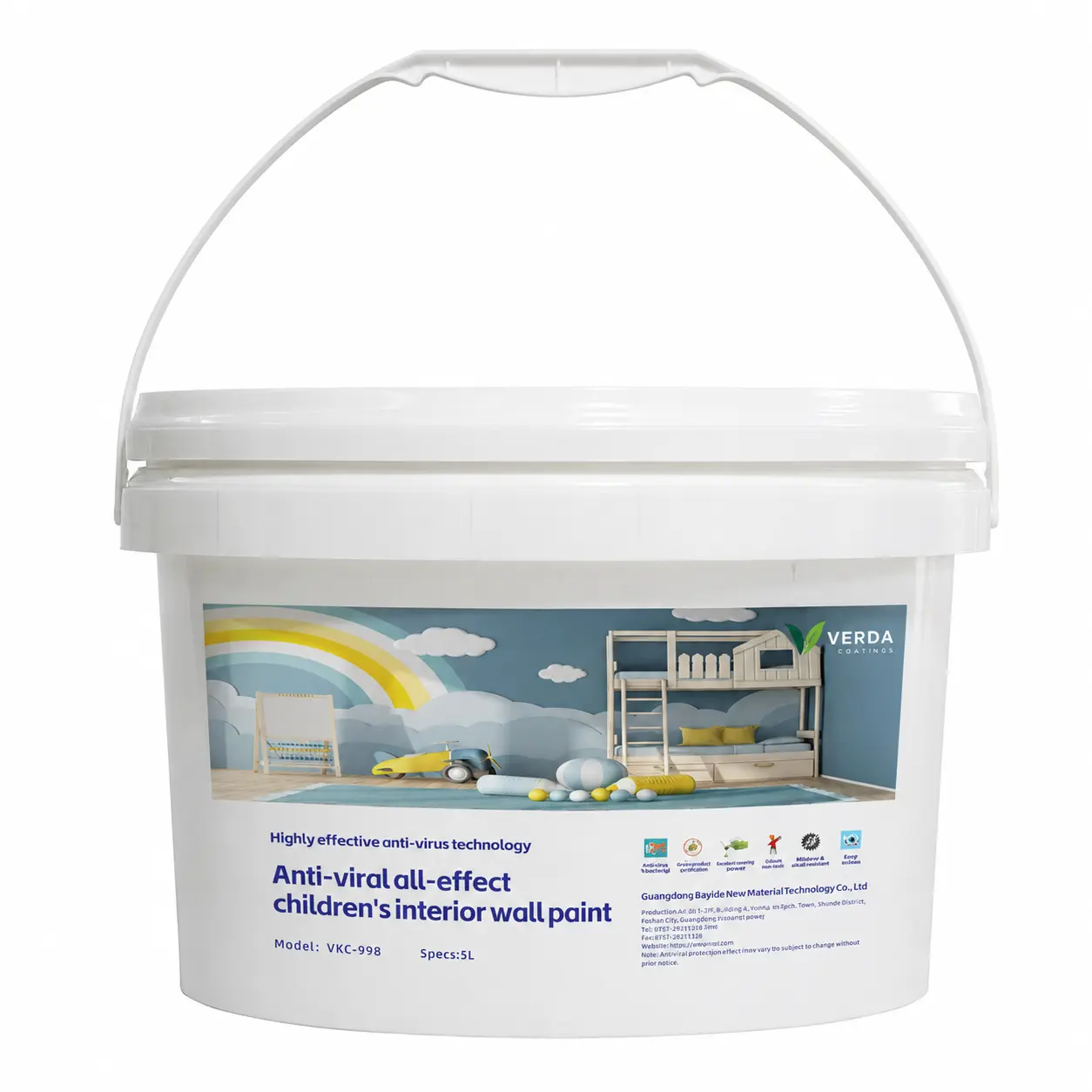
The VERDA Coatings product is shown in a white plastic pail with carry handle and lid design. That kind of packaging is straightforward for storage, stacking, and handling. For many buyers, packaging quality is as important as formula quality because it affects transport damage and shelf presentation.
3. Branding flexibility
A bulk interior paint supplier should be able to support either standard branded supply or OEM/private label programs, depending on the business model. Not every manufacturer is set up for both.
4. Technical transparency
Even if the supplier markets a simple interior coating, buyers should still ask for the basics: base type, sheen, application method, drying profile, coverage guidance, substrate compatibility, and cleaning expectations. None of those should be guessed.
5. Order consistency
The most frustrating problem in coatings sourcing is not a bad first sample. It is variation on repeat orders. A reliable manufacturer should be able to keep the product and packaging consistent enough for commercial use.
How interior architectural coatings are typically positioned in the market
Interior architectural coatings sit in a crowded category. At one end are economy wall paints that compete on price and volume. At the other are higher-function products aimed at durability, easier cleaning, or more specialized project requirements. Self-cleaning interior paint sits closer to the value-added end, even when the finish itself looks like a standard interior wall coating.
For buyers, the main question is whether the added function is real enough to justify its role in the specification. If a building sees frequent touch-up work, dark hand marks, or regular cleaning, a better-maintained wall finish can reduce labor over time. That is not marketing fluff; it is maintenance arithmetic. Fewer repaints and less scrubbing can matter more than the initial paint price, especially in commercial interiors.
That said, no interior wall paint manufacturer can solve all maintenance problems with a label alone. Wall prep, substrate condition, humidity during application, and crew workmanship still matter. A premium coating applied over a dusty, damp, or poorly repaired wall will still disappoint. This is a point many buyers learn the hard way, usually after the first project handoff.
What the VERDA Coatings product tells a buyer at a glance
From the available product information, the most concrete facts are modest but useful. The product is called Self-cleaning interior paint, model LFP-990, in a 5L package. The label also highlights “Efficient self-cleaning.” That tells us the product is aimed at the practical end of the market: a wall coating intended for indoor surfaces where appearance and maintenance both matter.
The packaging is also revealing. A round white plastic pail with a carry handle is a standard, efficient format for coatings supply. It is easy to store, easy to inspect, and suitable for shipping in a way that makes sense for distributors and contractors. The staged interior-room image on the label suggests a consumer-facing or project-friendly presentation rather than a lab-only or industrial-chemical look.
What we cannot safely assume from the available information is chemistry, VOC level, finish level, application method, or exact cleaning performance. Those details have to come from the supplier’s technical sheet or sample evaluation. Buyers should insist on that documentation before committing to a program.
Selection criteria that matter more than the sales brochure
A strong sourcing decision usually depends on a short list of practical checks.
First, ask how the product is intended to be used. A paint that works well in a showroom may not be the best choice for a corridor, daycare, or tenant turnover project. Interior wall paints are not all built for the same abuse level.
Second, look at whether the supplier can support your channel. An interior wall paint manufacturer with OEM experience may be more useful to a private label brand than a local retail-only producer. On the other hand, a distributor serving contractors may care more about steady availability and simple packaging than about custom labeling.
Third, pay attention to documentation discipline. Good suppliers do not overwhelm buyers with jargon; they provide enough data to evaluate the product honestly. That usually means technical data sheets, application guidance, and clear packaging specifications. If a supplier is vague about the basics, that is a warning sign.
Fourth, consider what your customers will ask after the sale. Can the wall be cleaned easily? Does it hold up in occupied interiors? Is there a difference between light cleaning and heavy scrubbing? Even if the supplier does not make formal claims, the answers should be clear enough for your own sales team to explain responsibly.
Common mistakes buyers make with interior paint sourcing
One common mistake is confusing marketing language with verified performance. “Self-cleaning” sounds useful, but it should not be treated as a technical guarantee without supporting data.
Another is overlooking packaging fit. A 5L pail may be perfect for some channels and awkward for others. Retail buyers, contractors, and project teams do not always want the same unit size.
A third mistake is buying on appearance alone. Interior coatings are often judged by color and finish first, but maintenance behavior can be more important over the life of the building. In high-touch spaces, the cheap choice can become the expensive one.
And finally, some buyers underestimate the role of application conditions. Even a good paint can fail to look consistent if the substrate is not prepared properly. That is not an excuse for weak formulation, but it is part of the reality of paint performance.
FAQ buyers usually ask a supplier
Is self-cleaning interior paint the same as washable paint?
Not necessarily. The terms are related in buyer language, but they may not mean the same thing technically. Ask the supplier how they define the claim.
Is a 5L pail enough for commercial sourcing?
It can be, depending on the project size and sales channel. A 5L format is often useful for trial orders, retail distribution, and smaller contractor jobs.
What should an OEM buyer request first?
Start with product data, packaging specifications, and confirmation of label or private label support. Then ask for sample supply and application guidance.
Can I assume the paint is water-based?
No. Unless the supplier clearly states the base type, do not assume it.
A sensible next step for buyers
If you are shortlisting an interior wall paint manufacturer, treat the first conversation as a qualification step, not a price negotiation. Ask for the technical data, packaging details, and available supply formats. If self-cleaning performance is a key selling point, request evidence of how the claim is defined and tested. For distributors and OEM teams, that is usually the point where weak suppliers separate themselves from serious ones.
VERDA Coatings’ LFP-990, presented as a 5L self-cleaning interior paint, fits the kind of product many channels are looking for: simple packaging, clear positioning, and a maintenance-friendly market story. The real decision still comes down to documentation, consistency, and whether the manufacturer can support your actual use case. That is the part worth checking before the first purchase order goes out.