What buyers really mean when they search for an interior wall paint manufacturer
When a sourcing manager looks for an interior wall paint manufacturer, the question is usually larger than “who can fill a bucket.” The real search intent is about finding a supplier that can hold a finish consistently, supply in volume, and make the product work in the kind of interiors customers actually build: apartments, offices, hospitality spaces, retail fit-outs, and showrooms. In other words, it is not only about paint chemistry. It is about reliability, packaging, appearance, and whether the factory can support a project without creating avoidable field problems.
That matters because interior coatings are judged in two places at once. First, in the specification stage, where the buyer wants a certain look, application feel, and price point. Then, on the wall, where the finish has to behave under real lighting, real labor conditions, and real renovation schedules. A decorative wall coating can look convincing in a sample room and still be unforgiving if the batch-to-batch consistency is weak. That is why buyers often end up comparing an interior wall paint supplier on more than the label description.
A closer look at velvet interior paint and why it gets attention
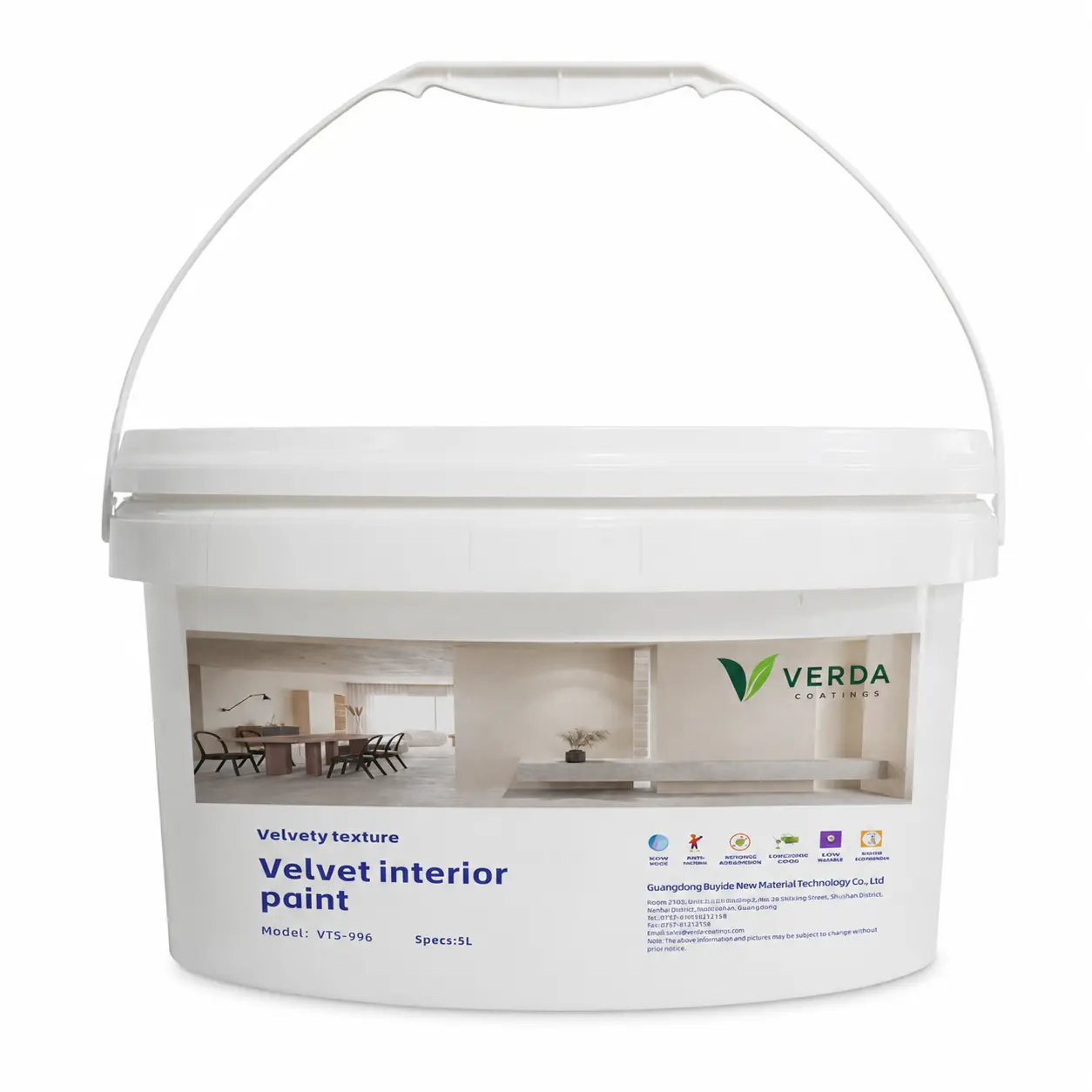
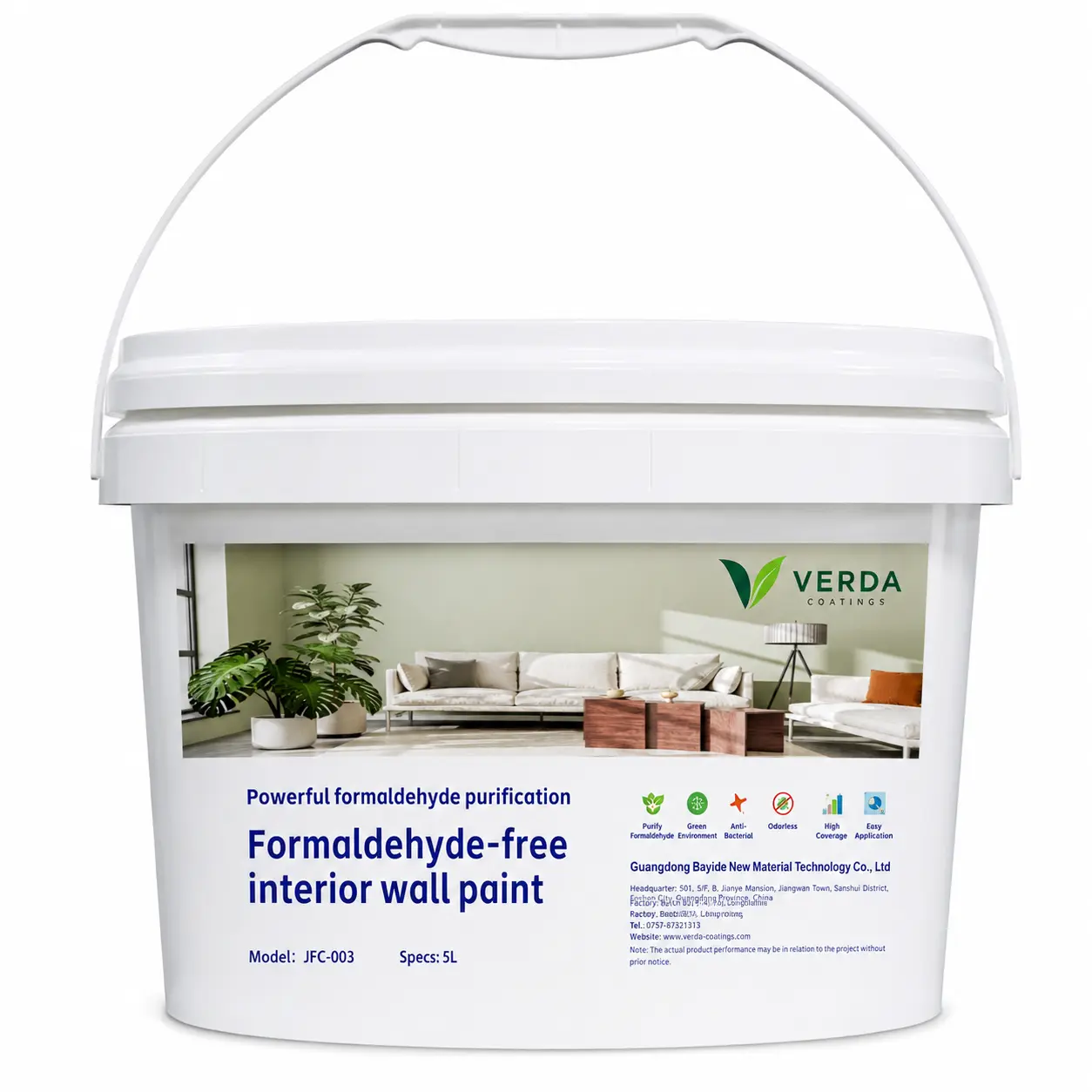
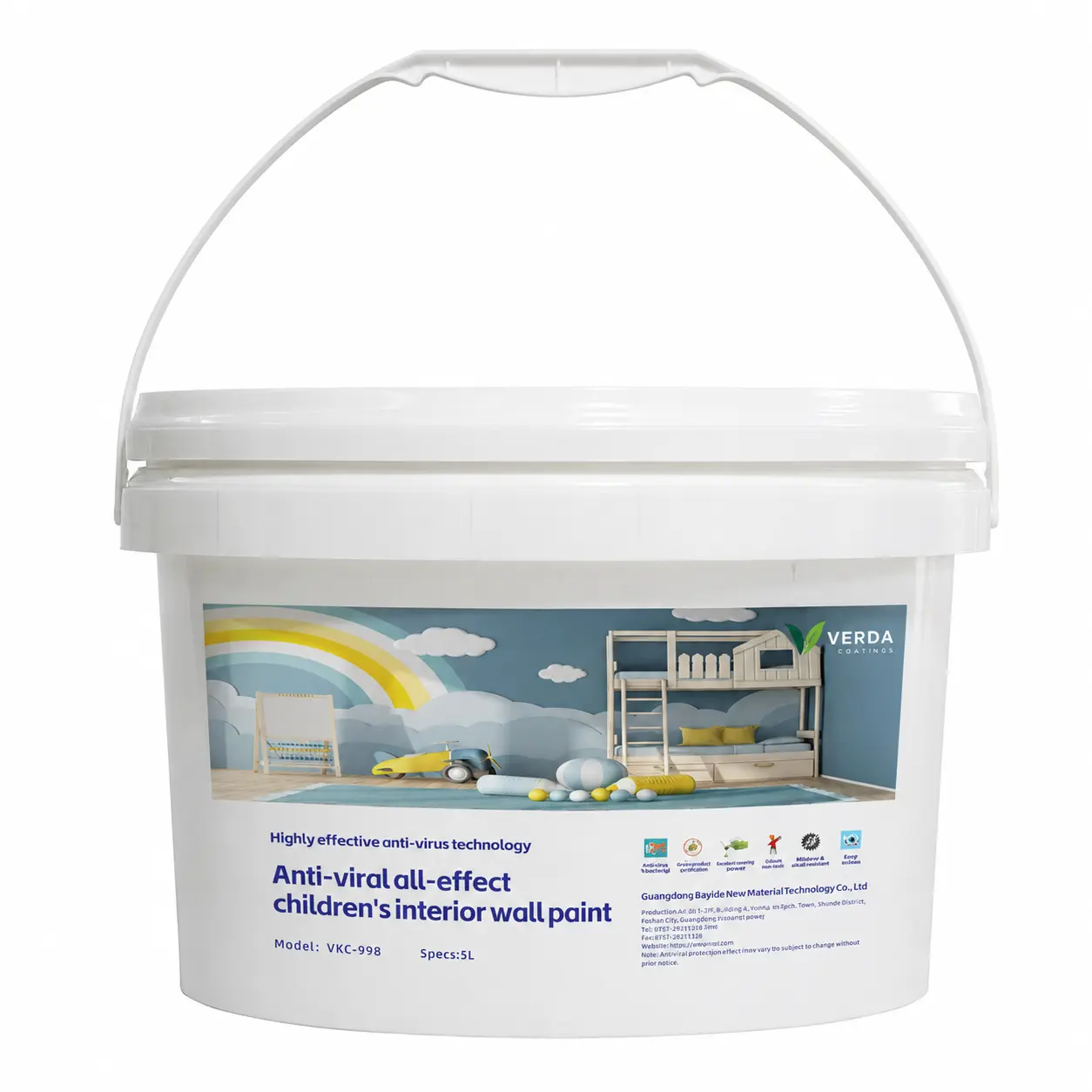
One of the more commercially interesting product types in decorative interiors is velvet interior paint. The product data here points to a finish described as having a “velvety texture,” packaged in a 5L white plastic bucket with model VTS-996. That is enough to tell us something useful: this is not a plain commodity wall coating. It is positioned as a specialty interior decorative paint intended to create a soft matte or velvet-like visual effect.
For buyers, that distinction matters. A velvet-style coating can help a project feel more finished without moving into highly complex specialty surfacing. It can be attractive in homes, but it also has clear appeal in offices, hospitality interiors, and branded commercial spaces where designers want a quieter, softer wall presence. In practice, that usually means customers are buying a finish, not just a color.
There is a caution here, though. Decorative terms such as “velvet,” “soft matte,” or “textured” can mean different things from one factory to another. Unless the technical data sheet is available, buyers should not assume the same sheen level, touch feel, or application behavior across suppliers. A label can describe the intent; it does not fully define the product.
What an interior wall paint manufacturer should be able to provide
A serious manufacturer should do more than make a bucket look market-ready. For project buyers, the practical questions are straightforward:
- Can the factory supply stable product quality across repeated orders?
- Is the coating designed for interior decorative use, or is it being adapted from a broader coating line?
- Can packaging be adjusted for different channel needs, such as retail, contractor, or private label?
- Does the supplier support both standard and customized requirements?
The available product notes indicate coating manufacture and supply, with both water-based and solvent-based coatings mentioned at a company level, along with OEM/customization services. That is useful for buyers because it suggests flexibility in product development and channel strategy. If you are a distributor, that can mean a broader catalog. If you are a contractor or brand owner, it can mean room to adapt packaging, labeling, or product positioning for local markets.
For a bulk interior paint supplier, these service details often matter as much as the formula itself. The ability to package in 5L pails, for example, fits a common project and retail format. It is also practical for interior renovation work where smaller, manageable units reduce waste and simplify site handling.
How to evaluate specialty interior paint without overcomplicating the buying process
A lot of paint sourcing goes wrong because buyers start with the marketing language instead of the end use. The better approach is to work backward from the project.
1. Define the surface and the lighting
Interior decorative finishes behave differently depending on substrate preparation and lighting. A velvet-like surface may look restrained under warm ambient lighting and far more pronounced under direct side light. That can be a feature, but it can also expose uneven application. Before ordering in bulk, buyers should ask how the finish reads on the actual wall system they plan to use.
2. Match the product to the labor skill available
Some decorative coatings are forgiving. Others are not. A specialty interior wall finish may require more disciplined application than standard flat paint. If the job will be installed by general painters rather than specialist finish crews, the risk profile changes. That is one reason procurement teams should ask for application guidance, not just a sales sheet.
3. Confirm the packaging and volume logic
The 5L bucket format shown in the product data is a clue about intended use. It often suits small-to-medium project lots, sample-driven specifications, and retail-oriented sales. For larger contracts, buyers should still ask whether the same product can be supplied in different pack sizes or under OEM arrangements. Not every project needs the same container size, and mismatched packaging can create needless handling cost.
Where velvet-style interior coatings make the most sense
This kind of decorative wall paint is usually strongest where appearance matters and the wall surface is part of the design language. That includes living spaces, reception areas, meeting rooms, boutique hospitality interiors, display spaces, and residential feature walls. It can also be used on ceilings in some concepts, though that depends on the product’s actual application characteristics, which should be verified rather than assumed.
For commercial buyers, the appeal is often less about novelty and more about differentiation. A velvet interior finish can help a project feel more premium without requiring the cost structure of more elaborate wall surfacing systems. Still, the buyer should keep expectations grounded. A decorative paint is not a miracle material. Surface preparation, substrate quality, and the painter’s technique still drive the final result.
Common mistakes when sourcing from an interior wall paint supplier
One frequent mistake is treating all interior paints as interchangeable. They are not. A finish that looks smooth in a showroom may behave differently when scaled across multiple rooms or when applied by different crews. Consistency matters more than the sales description suggests.
Another mistake is skipping the question of chemistry. The product data indicates the company works with both water-based and solvent-based coatings, but the exact chemistry of the shown velvet interior paint is not confirmed. Buyers should not infer that a package image tells the full story. If indoor air requirements, odor sensitivity, or cleanup preferences matter, the formula type has to be confirmed directly.
A third issue is buying only on visual effect. Decorative finishes should be assessed for application tolerance, touch-up behavior, and project repeatability. A wall coating that creates an attractive effect but is difficult to repair can become expensive once a building is occupied.
What distributors and private-label brands should ask before placing an order
If you are evaluating a manufacturer for resale or branded distribution, ask questions that go beyond color selection:
- Can the supplier support OEM labeling or custom branding?
- Is the product available in consistent batch sizes for project supply?
- Can technical usage instructions be provided for local markets?
- What is the factory’s approach to product variation between lots?
These are practical questions, not bureaucratic ones. In decorative coatings, the gap between sample approval and bulk delivery is where many problems begin. A dependable bulk interior paint supplier should be able to discuss handling, storage, application, and packaging in plain language. If those answers are vague, that is worth noticing.
Quick buyer takeaways
For the buyer, the value of an interior wall paint manufacturer is measured in consistency, not slogans. A velvet interior paint like the VTS-996 5L product suggests a specialty decorative finish with commercial and residential potential, but the real purchasing decision still depends on confirming use case, application requirements, and supply flexibility.
If you need a finish that can support interior design ambitions while still fitting project procurement realities, focus on the basics: product stability, package format, customization options, and clear technical support. That is usually where the difference between a capable supplier and a merely available one becomes obvious.
Next step for sourcing teams
Before requesting a quotation, ask for the technical data sheet, application guidance, and available packaging options for the velvet interior paint line. If your project needs private label, project supply, or channel-specific packaging, make that clear at the start. A good supplier can often adapt; a weak one will force you to do the adapting later, usually when the job schedule is already tight.