What buyers really want from an interior wall paint manufacturer
If you are comparing an interior wall paint manufacturer for a housing project, retail line, or private-label coating program, the first question is not usually about color. It is about consistency. Will the paint arrive the same from batch to batch? Does the supplier understand architectural coating supply, not just generic chemical filling? Can they support packaging, labeling, and the practical realities of construction sites where timelines slip and materials get stored longer than planned?
That is why the search for an interior wall paint manufacturer is often less about a single product and more about supply reliability, formulation discipline, and how well the supplier fits the buyer’s channel. A good interior wall paint supplier can save time for contractors and distributors. A weak one creates callbacks, repaints, and awkward explanations to customers who simply expected the wall to look clean and stay that way.
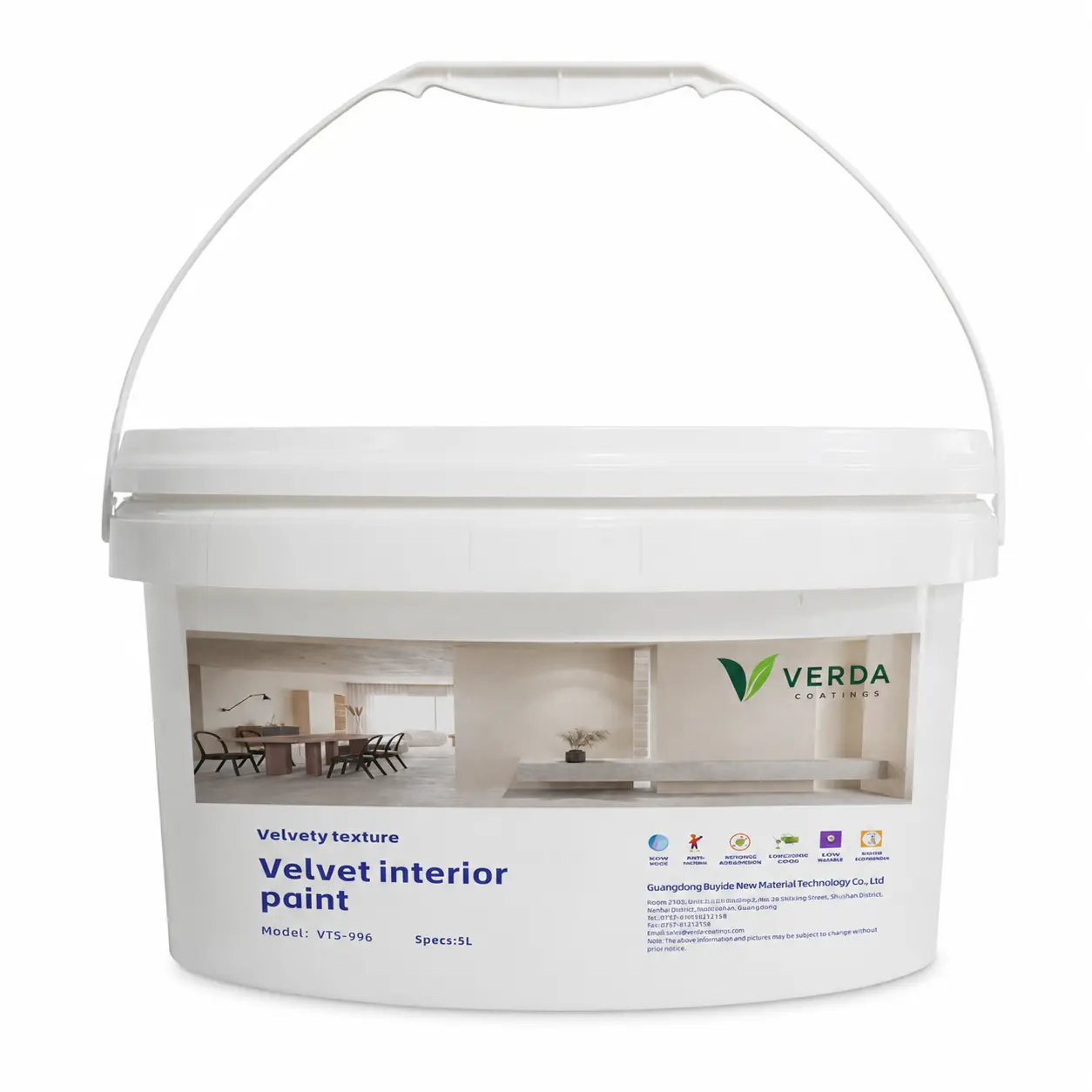
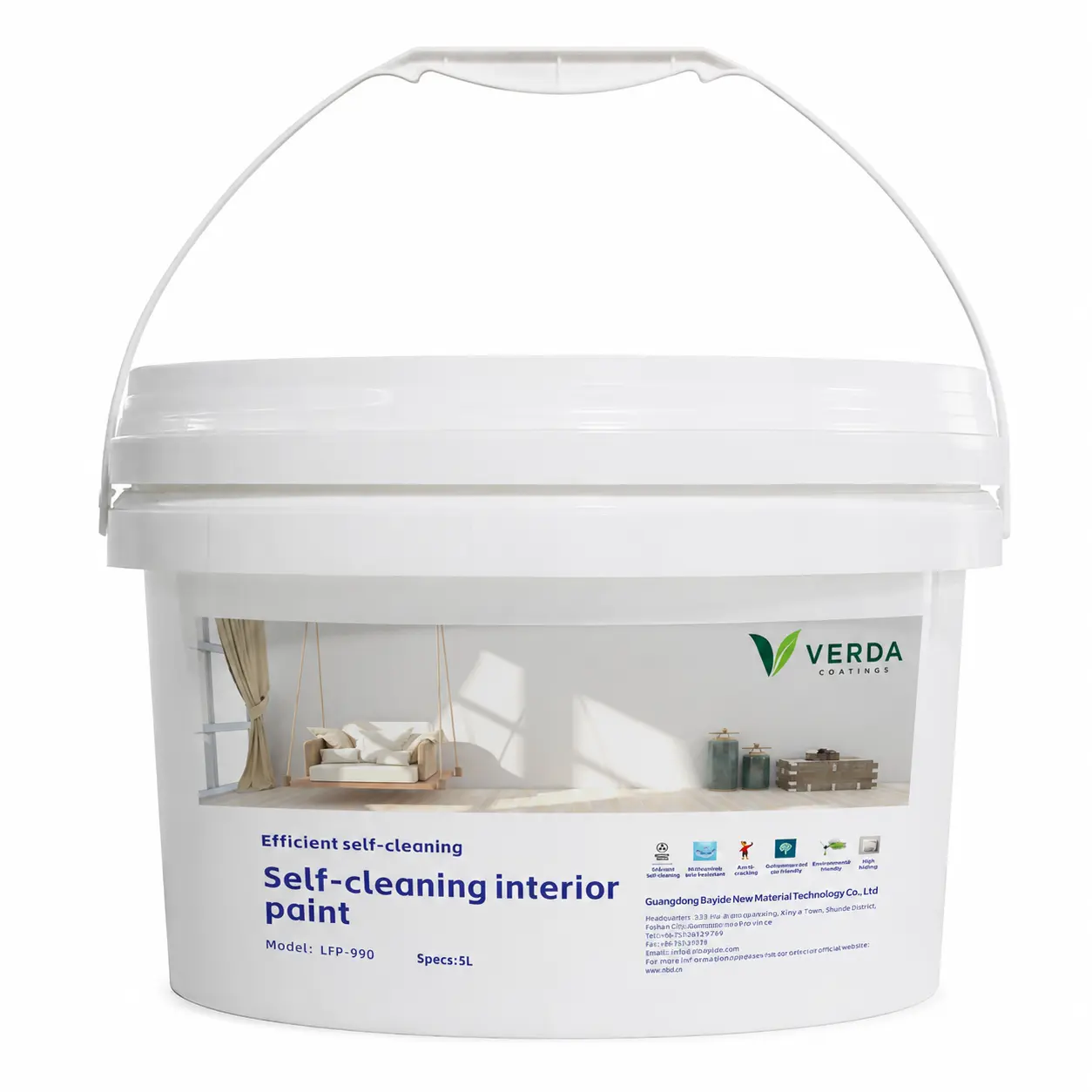
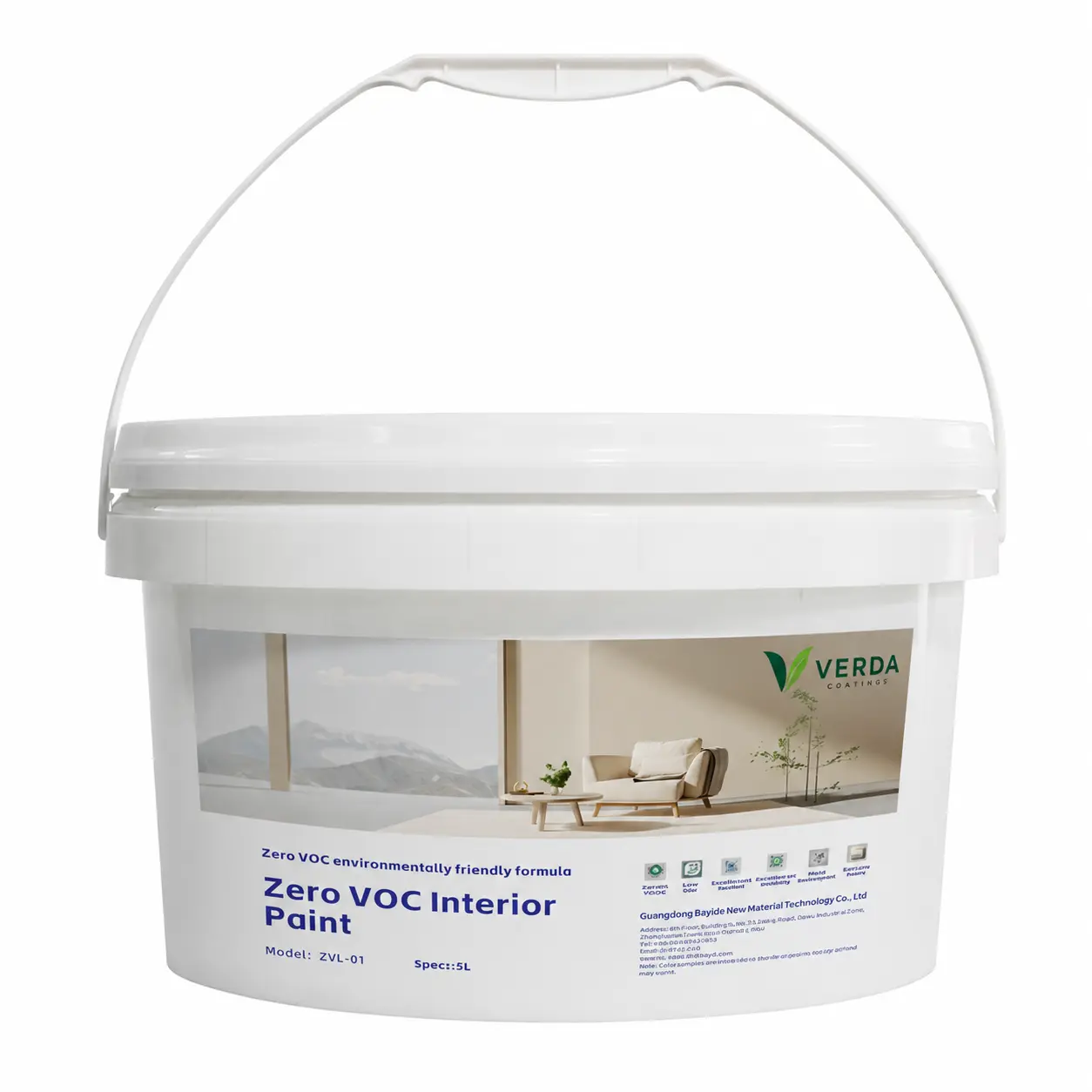
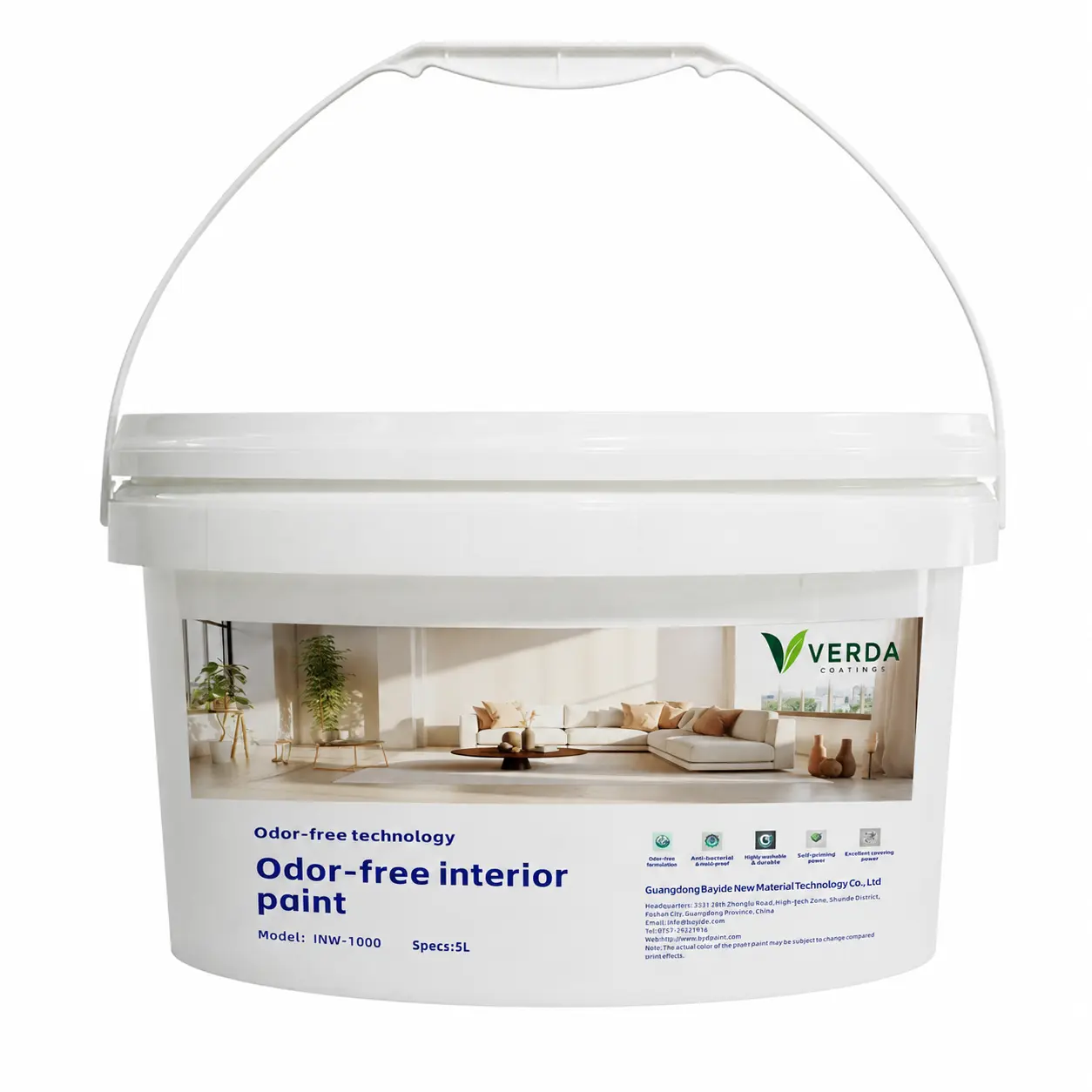
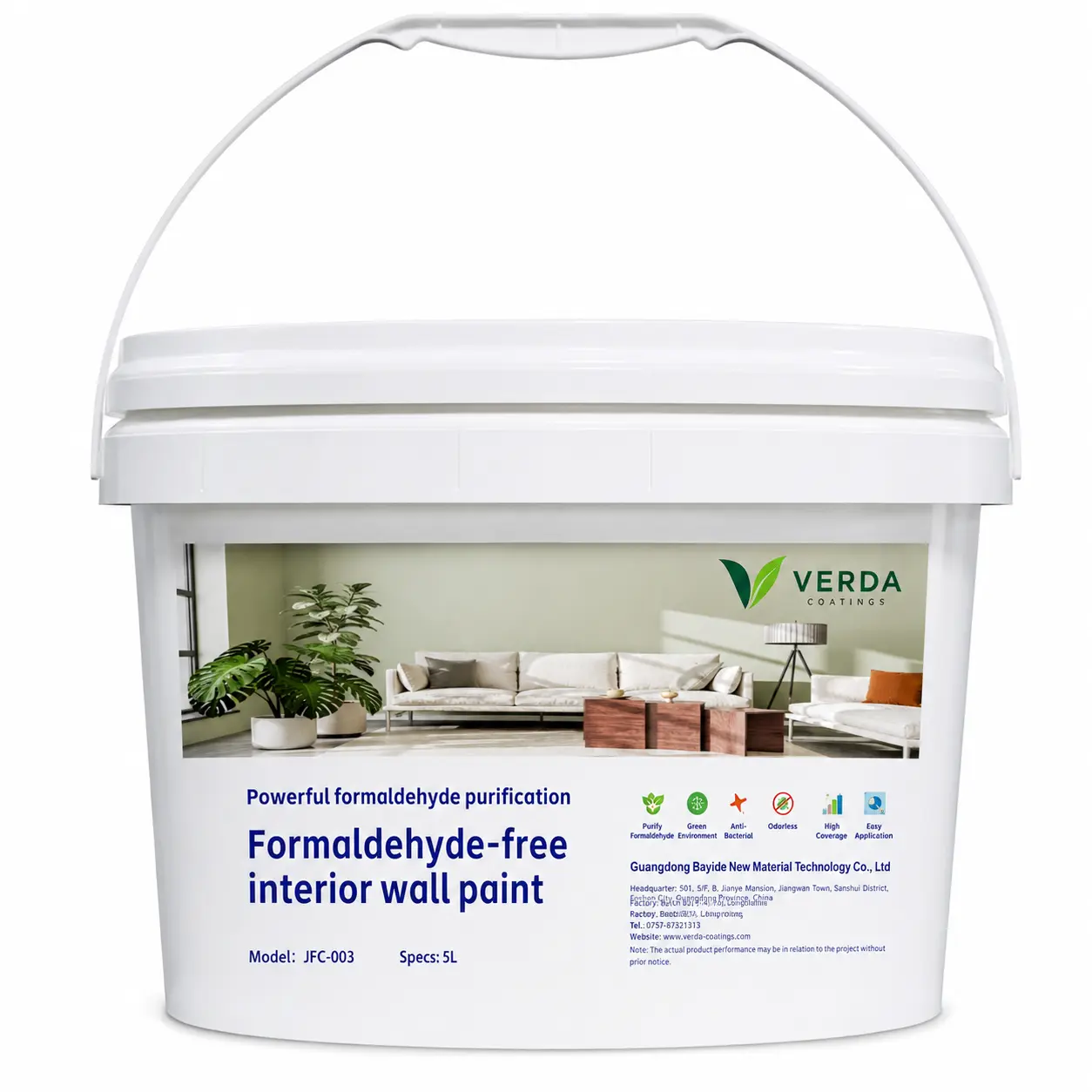
The product picture behind this topic is fairly familiar: a water-based interior wall coating, likely an emulsion paint, packaged in a 5L white plastic pail with a fitted lid and carry handle. In this case, the supplied product reference is VERDA Coatings model JFC-003, presented as a formaldehyde-free interior wall paint with claims around formaldehyde purification, odorlessness, anti-bacterial performance, and high coverage. Those are supplier claims, so a buyer should treat them as claims until they are supported by test data or qualification samples.
Why the choice of supplier matters more than the label language
Many product pages sound similar. “Green environment,” “easy application,” “odorless,” “high coverage” — these are common phrases in the architectural coating market. The difference is not the wording. The difference is whether the manufacturer can make those claims behave consistently on a wall, in a bucket, and across an order that may be repeated months later.
For engineers and sourcing teams, the decision often comes down to four practical questions:
Does the supplier have a stable coating formulation process?
Can they fill and package in the volumes your channel needs?
Are the labels and claims aligned with the actual use case?
Can they support OEM, private label, or project supply without creating logistical friction?
A bulk interior paint supplier may be perfectly adequate for general building projects but not for a retail brand that needs labeling discipline, shelf presentation, and a clear product story. Conversely, a brand-oriented factory may have attractive packaging but struggle when a contractor order requires repeated supply and customization.
Quick reference: what to compare before you place an order
1. Product function
Start with the intended indoor use. Interior wall paint is not one single thing. It may be designed for residential renovation, office interiors, commercial spaces, or project-based architectural coating supply. The buyer should check whether the paint is intended for standard indoor decoration, specific substrate conditions, or a higher-traffic environment where additional performance expectations may apply.
2. Claims versus evidence
Formaldehyde-free positioning and formaldehyde purification claims are attractive, especially for renovation and indoor living spaces. But practical buyers should ask for the supporting test basis, not just the marketing phrase. The same caution applies to antibacterial claims. These can matter, but only if the supplier can explain what was tested and under what conditions.
3. Packaging and handling
The 5L pail format is common for smaller renovation jobs and retail distribution. It is also useful for contractors who want manageable containers. Still, packaging details matter: lid fit, handle strength, labeling durability, and how well the can survives transport. A clean bucket is useful only if it stays clean from warehouse to jobsite.
4. Channel fit
Some buyers need a polished shelf product. Others need a dependable supply line for project work. A manufacturer that can serve both is valuable, but only if its production and packing lines can keep pace without making minor quality drift look normal.
About the referenced product: VERDA Coatings JFC-003
The supplied product information points to VERDA Coatings and Guangdong Bayide New Material Technology Co., Ltd. as the manufacturer, with the website verda-coatings.com. The visible product reference is JFC-003 in a 5L pack. The label presentation suggests a clean white, green, and blue brand design, which fits the common visual language of environmentally positioned wall coatings.
The listed selling points include formaldehyde-free interior wall paint, powerful formaldehyde purification, green environment positioning, anti-bacterial properties, odorlessness, high coverage, and easy application. From a sourcing perspective, that combination tells you something useful even before you see a technical sheet: the product is being positioned for indoor comfort, renovation appeal, and user-friendly application rather than specialized industrial coating performance.
That matters because interior paint buyers often need to balance technical performance with perception. A homeowner wants low odor and a clean finish. A contractor wants manageable application. A distributor wants a product story that is easy to explain. A manufacturer that understands all three tends to be easier to work with.
What to ask an interior wall paint supplier before qualifying them
Batch consistency and formulation control
A coating is only as dependable as its repeatability. Ask how the supplier controls incoming raw materials, mixing, filtration, and filling. You do not need the full factory map on day one, but you do need confidence that the next order will not behave like a different product.
Application behavior
Do not assume “easy application” means the same thing to every factory. Some suppliers mean better brush feel. Others mean fewer drips, better leveling, or simpler roller application. Since the actual finish and dry-time data were not supplied here, it is smarter to request application notes and a field sample before committing to volume.
Packaging customization
For OEM or private-label buyers, packaging is not a side issue. It is part of the product. Confirm whether the manufacturer can support label changes, language variants, carton requirements, and different pail sizes. The 5L format is useful, but some channels will also want larger project packs or a different configuration for bulk interior paint supply.
Compliance and claims management
This is where many deals become messy. If the label says formaldehyde-free or antibacterial, your team should know exactly what documentation accompanies the claim. If you are selling into a stricter channel, claims that are vague on the page can become a problem later in the sales cycle. Better to clear that up before production starts.
Common mistakes buyers make when sourcing interior wall coatings
One mistake is overvaluing the marketing phrase and undervaluing the production system. Another is asking for price before confirming whether the supplier is a true manufacturer, a filler, or a trading intermediary. Those are not the same thing, especially when the buyer wants stable supply.
Another common issue is assuming one paint can serve every indoor application. Homes, offices, rental units, and commercial interiors may share a category name, but they do not share the same expectations. A repaint in a rental unit is judged differently from a premium residential wall finish. Small difference on paper; large difference in complaints.
There is also a packaging trap. Buyers sometimes approve a good sample and then ignore the container details. But pail quality, lid seal, and print clarity all affect how the product is received at the point of sale and on the jobsite. That is especially true when the paint is sold through distributors or used in project handover packages.
Practical buyer advice for contractors, distributors, and private-label brands
For contractors, the safest approach is to qualify the paint on a small section of the actual substrate you use most often. Painted drywall, repaired plaster, and mixed-surface renovation projects can behave differently. A wall coating that looks fine on a sample board may feel less forgiving once applied across an imperfect wall.
For distributors, the key issue is sell-through. A product like this, with environmental and odor-conscious positioning, may appeal to renovation customers and specifiers who want a cleaner indoor story. But that only works if the label language is clear and the product is simple enough for sales staff to explain without overpromising.
For OEM and private-label buyers, the real value of an interior wall paint manufacturer is not just formulation. It is the ability to act like a supply partner. That means packaging flexibility, steady replenishment, and a willingness to adjust presentation for your channel without making the process feel improvised.
When the formaldehyde-free angle helps, and when it should be handled carefully
Indoor air quality is a legitimate buying concern. Products aimed at formaldehyde-related positioning often appeal to residential renovation buyers, schools, offices, and other interior spaces where odor and perceived freshness matter. That said, buyers should be careful not to let one claim do the work of five.
A wall coating may be designed with formaldehyde-conscious positioning, but the buyer still needs to confirm the basic coating properties that matter in real use: finish appearance, application feel, substrate suitability, and the way the product behaves after drying. A clever label does not fix poor film formation, and it certainly does not replace technical evaluation.
Questions worth sending to the factory
If you are shortlisting a manufacturer, send a simple but direct request:
What is the intended application scope for JFC-003 or the equivalent interior wall coating?
Can the factory support OEM or private-label packaging?
What documentation is available for formaldehyde-related and antibacterial claims?
What pack sizes are available beyond the 5L pail shown here?
Can the supplier provide sample units and a standard product specification sheet?
Those questions are enough to separate a serious manufacturer from a nice-looking listing.
Choosing the right partner for your next interior paint program
The best interior wall paint manufacturer is rarely the one with the most energetic product description. It is the one that can keep its paint consistent, its packaging clean, and its claims supportable. For buyers sourcing an interior wall paint supplier or a bulk interior paint supplier, that distinction matters more than any glossy promise on a bucket.
If your project is moving toward procurement, start by requesting samples, technical details, and packaging options from the factory behind VERDA Coatings model JFC-003 or from any equivalent supplier you are considering. Then compare them the way a contractor would: not by slogans, but by how the product handles on a real wall and how the supplier behaves after the first order is placed.